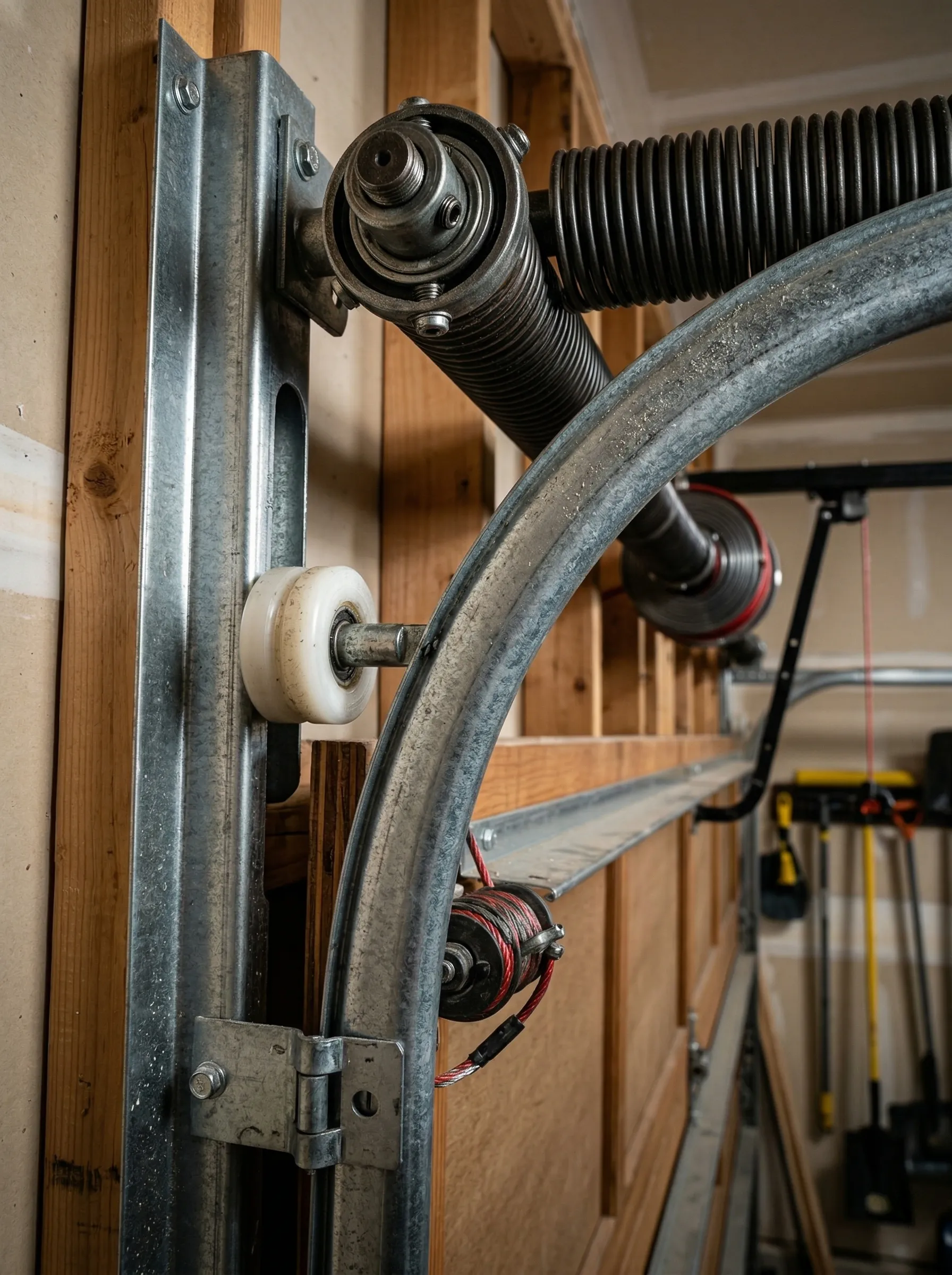




Garage door cables are not something most homeowners think about during a normal day. You press the remote, the door opens, and you move on. But when the door starts looking crooked, dragging on one side, or sounding strained, the cables may be part of the problem. That is why garage door cable care matters. A few safe habits can help Santa Ana homeowners reduce extra strain, spot warning signs early, and avoid bigger damage to the lifting system.
At Garage Door Dimension, we do not expect homeowners to repair cables themselves. In fact, garage door cables should be handled by trained professionals because they work with high-tension parts. Still, you can protect your garage door by knowing what to watch for, what habits to avoid, and when to schedule an inspection before a small issue becomes a serious repair.
Habit #1: Never Force a Jammed Garage Door
If your garage door gets stuck, your first reaction may be to press the remote again. That feels natural, right? You need to leave for work, pick up the kids, or get to an appointment near South Coast Metro.
However, forcing a jammed door can place extra stress on the cables, springs, rollers, hinges, and opener. If the door is stuck because of a roller issue, damaged track, or poor garage door balance, the cables may pull unevenly.
Stop using the opener if the door jams, tilts, or struggles. A quick pause can prevent more damage than another forced cycle.
Habit #2: Keep the Garage Door Opening Clear
A small object in the door path can create a big problem. Tools, bikes, trash bins, storage boxes, and sports gear can block the door or hit the lower section as it closes.
When the door meets resistance, the lifting system can take extra strain. Over time, this can affect cable tension and create uneven movement.
Make it a habit to keep the opening clear. Check the floor near the tracks, the bottom seal area, and both sides of the garage door. This simple step supports smoother movement and helps protect the cables from unnecessary stress.
Habit #3: Watch for Uneven Garage Door Movement
A healthy garage door should move evenly on both sides. If one side rises faster, hangs lower, or seems to drag, something may be wrong with the lifting system.
Uneven movement can point to cable wear, garage door balance problems, a damaged track, roller trouble, or hardware strain. You may also notice the door shaking as it moves.
Do not ignore a crooked garage door. Even if the opener still works, the cables may be under uneven pressure. Scheduling garage door repair Santa Ana homeowners can trust early may help prevent a more serious issue later.
Habit #4: Inspect Visible Cable Condition From a Safe Distance
You can look at visible cable areas without touching them. This safe visual check can help you spot early warning signs.
Look for:
- Frayed cable strands
- Rust or corrosion
- Loose-looking cable sections
- Cables that look uneven from one side to the other
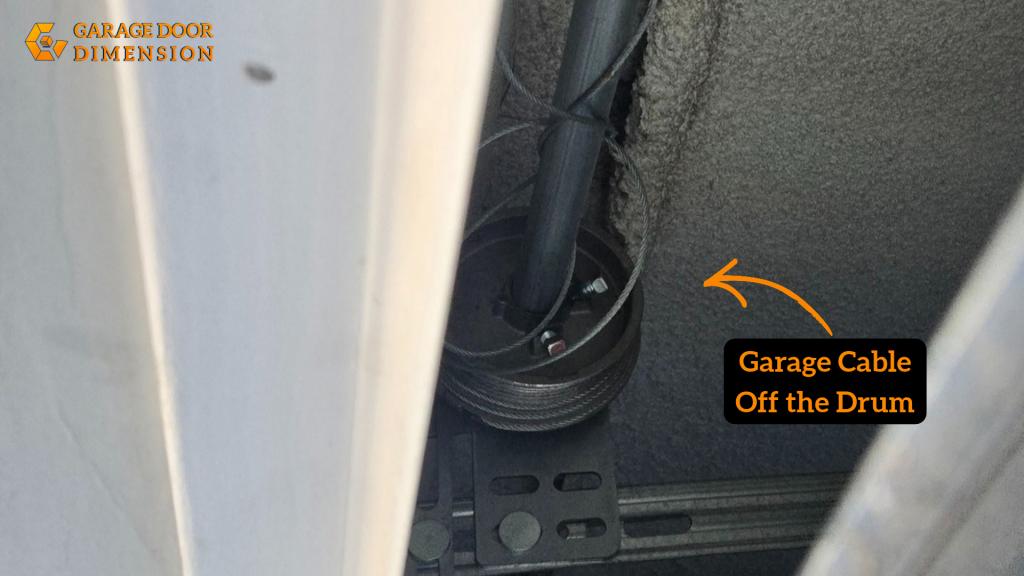
- A cable that seems off the garage cable drum
- Door movement that looks shaky or unbalanced
Never pull, adjust, unwind, or cut a garage door cable. Cables work with high-tension parts, and they can move suddenly if handled the wrong way. If something looks wrong, contact Garage Door Dimension immediately.
Habit #5: Listen for New Sounds During Daily Use
Your garage door often tells you something before it fully breaks down. Have you noticed a new scraping sound? Does the door pop, snap, or rattle more than usual?
New sounds can come from many places, including cable strain, worn rollers, loose hinges, or track problems. This is where garage door roller care can also help. A smooth garage door places less stress on the full system, including the cables.
If the sound keeps getting worse, do not wait. A professional garage door roller inspection or cable inspection can help identify whether the problem comes from the rollers, cables, tracks, opener, or another part.
Habit #6: Pay Attention to Roller and Track Problems
Cables do not work alone. The rollers and tracks guide the door while the lifting system supports the door’s weight. If the rollers drag, wobble, or pop out, the cables may have to work harder.
That is why garage door roller maintenance matters, even in a cable care blog. Worn rollers, damaged tracks, and poor alignment can all create rough movement. Rough movement can increase strain on cables and related hardware.
If your door shakes, drags, or sounds rough, do not assume it is only a roller problem or only a cable problem. A full inspection helps find the real cause.
Garage Door Cable Care Habit #7: Schedule Maintenance Early
Many cable problems start small. A little fraying. A slight tilt. A door that feels heavier than before. A cable that does not sit the same way on both sides.
The safest habit is to schedule garage door maintenance when you notice a change. You do not need to wait until the cable breaks or the door stops working.
Professional maintenance can check cable tension, visible cable wear, garage door balance, rollers, tracks, hinges, opener operation, and the garage cable drum. It can also confirm whether the door needs adjustment, repair, or part replacement.
Why Garage Door Cable Care Matters for Santa Ana Homes
Many Santa Ana homeowners use the garage as a main entrance. Between school runs, work, errands near Downtown Santa Ana, weekends around Floral Park, and daily trips through Park Santiago or Washington Square, the garage door may open and close many times each week.
That daily use adds up. Dust, older hardware, worn rollers, and poor garage door balance can all affect how the cables perform.
Catching cable problems early can help reduce strain on the lifting system and protect nearby parts before the issue turns into a larger residential garage door repair.
Garage Door Cable Care FAQs
How often should garage door cables be inspected?
Most homeowners should have the cables checked during regular garage door maintenance. If your garage door gets heavy daily use, schedule an inspection sooner when the door starts moving unevenly, sounding strained, or feeling different than usual.
Should both garage door cables be replaced at the same time?
In many cases, yes. If one cable has serious wear or damage, the other cable may also have age-related stress. A technician can check both sides and explain whether replacing both cables will help the door move more evenly.
Can I still use the garage door opener if one cable looks damaged?
No. Avoid using the opener if a cable looks damaged, loose, or out of place. The opener can add more strain to the door and make the problem worse. Schedule an inspection before running the door again.
Are garage door cables and springs the same thing?
No. Cables and springs work together, but they do different jobs. Springs help carry the door’s weight, while cables help lift and guide the door through each cycle. When one part struggles, the other parts can feel extra stress.
Is it safe to pull the emergency release if I suspect a cable problem?
Do not pull the emergency release if the door looks crooked, stuck, or unstable. The door may move suddenly if the lifting system has a problem. It is safer to leave the door alone and call a professional.
Save This Garage Door Cable Care Checklist
Cable problems are easier to catch when you know what changes to watch for. This quick checklist gives Santa Ana homeowners a simple way to notice early signs of strain before the door becomes harder or unsafe to use.
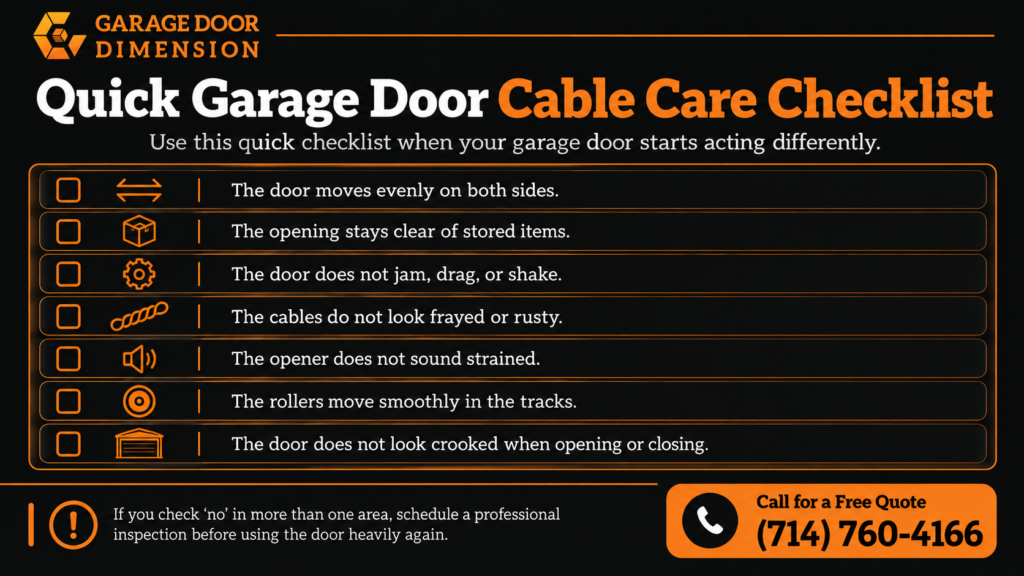
Note: This checklist does not replace a professional inspection, but it can help you know when something feels off.
If you check “no” in more than one area, avoid using the door heavily and schedule service before extra strain affects the cables, rollers, tracks, springs, or garage cable drum.
Regular garage door cable care starts with paying attention early. A few small warning signs can be the difference between a simple adjustment and a larger residential garage door repair.
Catch Cable Problems Before They Put More Strain on Your Door
A crooked, shaky, or strained garage door is not something to keep using and hope it fixes itself. If the cables are wearing down or losing proper tension, each cycle can place more pressure on the rollers, tracks, springs, opener, and garage cable drum.
Garage Door Dimension can inspect your full lifting system, check for visible cable wear, and explain what needs attention before the problem turns into a bigger residential garage door repair. Our licensed California technicians are located in the heart of Orange County, which helps us respond quickly to Santa Ana homeowners and nearby communities.
Do not wait for a frayed cable, uneven door, or strained opener to become an emergency. Call Garage Door Dimension today at (714) 760-4166 for professional garage door repair in Santa Ana and nearby Orange County areas.





 I am a Garage Door Professional
  I am a Residential or Commercial Customer