



Your garage door rollers are easy to ignore until the door starts sounding rough. Maybe it rattles when you leave for work, shakes as it opens, or drags near the track when you come home. At first, you may think it is just normal noise. But those small changes can say a lot about your garage door rollers lifespan and whether the rollers are starting to wear out.
Last week, we covered simple garage door roller care habits that can help keep the roller area cleaner and easier to monitor. This time, we’re shifting gears from maintenance to longevity. How long do rollers really last? What everyday factors speed up their wear? And when should homeowners start thinking about replacement? Let’s break it down together.
Quick Answer: Garage Door Rollers Lifespan for Most Homes
The average garage door rollers lifespan can vary because every garage door gets used differently. Many rollers can last several years, but there is no exact timeline that fits every home.
The real lifespan depends on the roller type, daily use, door weight, maintenance, track condition, and overall door balance. A lightly used garage door may keep its rollers longer. Additionally, a garage door that opens many times a day may wear them sooner.
So, instead of looking only at age, pay attention to movement, sound, and visible wear. Those signs often tell you more than the calendar does.
Why Roller Lifespan Is Not the Same for Every Garage Door
Two homes on the same street can have different roller wear. One family may open the garage twice a day. Another may use it for school pickup, work, errands, deliveries, and evening plans. That daily use adds up.
A heavier garage door can also place more strain on the rollers. Older tracks, loose hinges, dust buildup, and poor garage door maintenance can make the rollers work harder than they should.
Santa Ana weather can play a role too. Warm days, dry air, and dust can affect the areas around the tracks. Homes near Floral Park, Park Santiago, Downtown Santa Ana, and South Coast Metro may also have different garage setups and use patterns.
That is why the garage door rollers lifespan depends on the whole system, not just the roller itself. But first, let’s get familiar with what a healthy garage door roller should look like and sound like before problems start creeping in.
What Healthy Garage Door Rollers Should Look and Sound Like
Before you judge wear, it helps to know what normal looks like. This quick baseline can also help you understand your garage door rollers lifespan more clearly.
A healthy roller system should show these signs:
- The rollers glide smoothly in the tracks. It should not jerk, jump, or drag as it moves.
- The rollers stay in place. They should not look tilted, loose, or like they are shifting inside the track.
- The door moves evenly. Both sides should rise and lower at the same pace.
- The door sounds steady. Light operating sound can be normal, but grinding, scraping, or rattling is not.
- The opener does not struggle. A smooth garage door should not make the opener sound strained or overworked.
- The movement feels controlled. The door should not shake hard, vibrate, or look unstable.
Even healthy rollers can wear down over time. Thus, regular garage door roller maintenance can help you spot small changes before they turn into rough movement, noise, or repair needs.
Next, let’s look at what worn rollers usually sound and feel like when they start causing trouble.
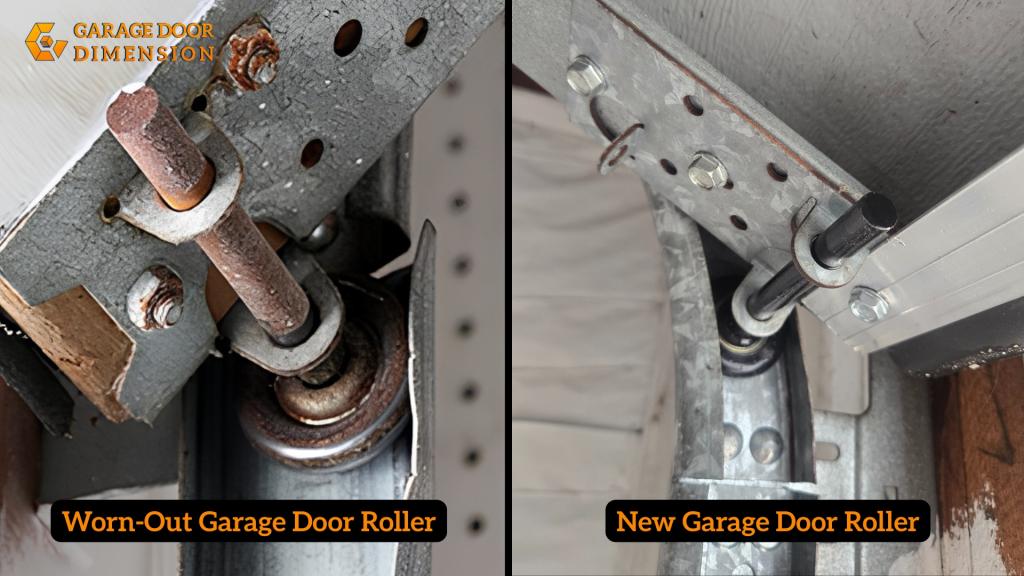
What Worn Garage Door Rollers Really Look Like
Worn rollers do not always look dramatic. Sometimes the signs are small. That is why a safe visual check can help. Look at the rollers you can see without touching the track, hinge, cable, or spring system. Do not remove anything. Just observe from a safe distance.
Common visual signs include:
- Cracked or chipped roller wheels
- Worn or flat-looking edges
- Rollers that look tilted
- Rollers that wobble inside the track
- Loose-looking roller stems
- Rollers that do not appear to turn smoothly
If one roller looks worn, the others may be close behind. This often happens on older doors or doors that get used several times a day.
Garage Door Roller Wear Symptoms: What You Will Hear and Feel
Sometimes you hear roller wear before you see it. A worn roller may grind, squeak, rattle, or scrape as the door moves.
Have you noticed the door getting louder each month? Does the sound come from one side of the track? Does the door shake while the opener runs?
These sound and movement changes can point to roller wear:
- Grinding near the tracks
- Rattling during movement
- Squeaking that keeps getting worse
- Garage door vibration
- Door dragging or jumping
- Opener sounding strained
A noisy garage door does not always mean the rollers are the only problem. Tracks, hinges, springs, cables, and the opener can also affect movement. But when sound and shaking show up together, you should not ignore it. The longer worn rollers stay in use, the more stress they can place on nearby parts.
For a step‑by‑step look at how to spot roller issues early, check out our related guide on how to inspect garage door rollers before they start causing trouble.
When Roller Wear Means It May Be Time for Replacement
Rollers do not need replacement just because they are old. Their condition matters more than their age. Still, once the rollers start affecting how the door moves, it may be time to discuss garage door roller replacement.
Replacement may make sense when:
- The rollers look cracked, chipped, or worn down.
- One or more rollers wobble in the track.
- The door shakes every time it opens or closes.
- Grinding or rattling keeps getting worse.
- The door drags, jumps, or feels uneven.
- The opener sounds strained during normal use.
- Several rollers show wear at the same time.
At Garage Door Dimension, we recommend powder-coated doubled-sealed nylon rollers for many replacement situations because they support smoother, quieter door movement. We also keep them in our Orange County warehouse, which helps us complete many standard roller replacement jobs without long parts delays.
If your garage door is getting louder, shaking more, or no longer moving smoothly, a professional garage door roller inspection can help confirm whether maintenance, repair, or replacement makes the most sense.
What Can Shorten Garage Door Rollers Lifespan?
So, what can cause garage door rollers to wear out sooner than expected? Several factors play a role, but heavy daily use is one of the biggest. If your garage doubles as the main entrance to your home, those rollers are moving constantly, and that extra strain makes them wear faster.
Dust and debris near the tracks can also affect movement. Small buildup may not seem serious, but it can make the door drag or sound rough over time.
Poor garage door maintenance can create more wear too. When no one checks the rollers, tracks, hinges, or opener, small problems may continue for months. Eventually, the door may become louder, slower, or harder to move.
Other causes include:
- A heavy garage door
- An unbalanced door
- Older hinges or hardware
- Track problems
- Worn weather seals
- Opener strain
- Lack of regular garage door maintenance
Your rollers last longer when the entire system runs in sync. To keep everything working smoothly, schedule a full garage door maintenance each season.
Common Questions Homeowners Ask About Garage Door Rollers
Should all garage door rollers be replaced at the same time?
In many cases, yes. If several rollers show wear, replacing the full set may help the door move more evenly. Replacing only one badly worn roller may solve one problem, but the older rollers can still create noise, shaking, or uneven movement later.
Can I replace garage door rollers myself?
It is safer to let a professional handle garage door roller replacement. Some rollers connect near high-tension parts of the door system, especially near the bottom brackets. If handled the wrong way, these parts can move suddenly and cause injury.
How many rollers does a residential garage door usually have?
Many residential garage doors have around 10 rollers, but the number can vary based on the door size and design. Larger or custom doors may use more rollers. During an inspection, a technician can check each roller and explain whether one, several, or all of them need attention.
Can worn rollers make my garage door opener wear out faster?
Yes, they can. If the rollers do not move smoothly, the opener may have to work harder to lift and lower the door. Over time, that extra strain can affect the opener and other moving parts.
Do garage door rollers need a specific type of lubricant?
Some rollers and garage door parts may need proper garage door lubricant, but random sprays can attract dust or leave sticky buildup. It is best to avoid using products that are not made for garage door systems. If the door is already grinding, dragging, or shaking, lubrication alone may not fix the problem.
Garage Door Rollers Lifespan Checklist for Homeowners
Use this quick checklist when your garage door starts sounding or moving differently.
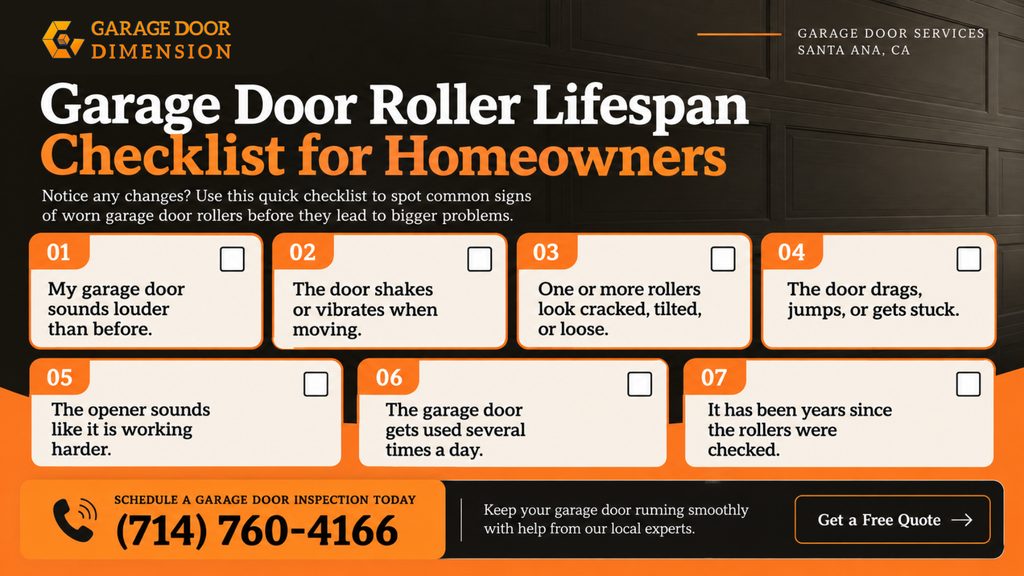
If you check more than one item, schedule a professional inspection. Catching roller wear early can help prevent bigger garage door repair needs later.
Schedule Your Garage Door Roller Inspection Today
If your garage door no longer moves smoothly, don’t wait until worn rollers cause damage to tracks, hinges, or the opener. At Garage Door Dimension, our licensed California technicians inspect rollers, springs, cables, and the full system to pinpoint the issue before it becomes a costly repair.
Based in the heart of Orange County, we respond quickly to Santa Ana homeowners and nearby communities. Whether you need roller service, seasonal garage door maintenance, or a complete residential repair, we’ll explain the safest next step clearly and without pressure.
Contact Garage Door Dimension today at 714-760-4166 to schedule professional garage door service in Santa Ana and across Orange County.

 I am a Garage Door Professional
  I am a Residential or Commercial Customer