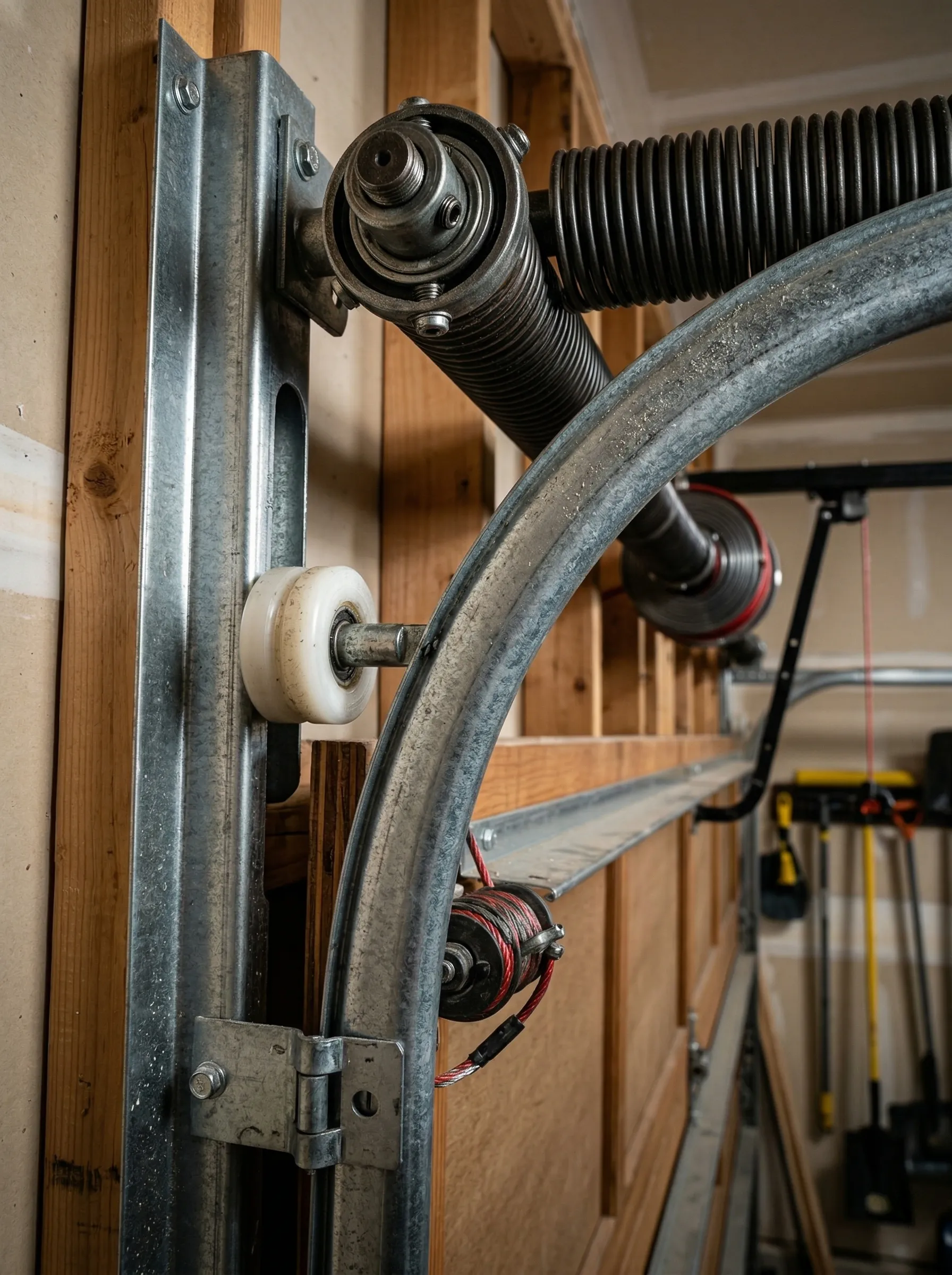





Most homeowners never think about the small metal drums above their garage door. Why would they? When everything works, the door simply goes up, comes back down, and stays level while doing it. But behind that smooth movement, the garage door cable drum is doing an important job.
The drum controls how the lifting cable winds and releases as the door moves. It also works directly with the torsion spring and torsion shaft. When those parts stay in sync, both sides of the garage door rise together. When they do not, you may see a crooked door, a loose cable, or a door that suddenly refuses to move.
Understanding how this system works can help you recognize why a cable problem is not always just a cable problem.
What Does a Garage Door Cable Drum Do?
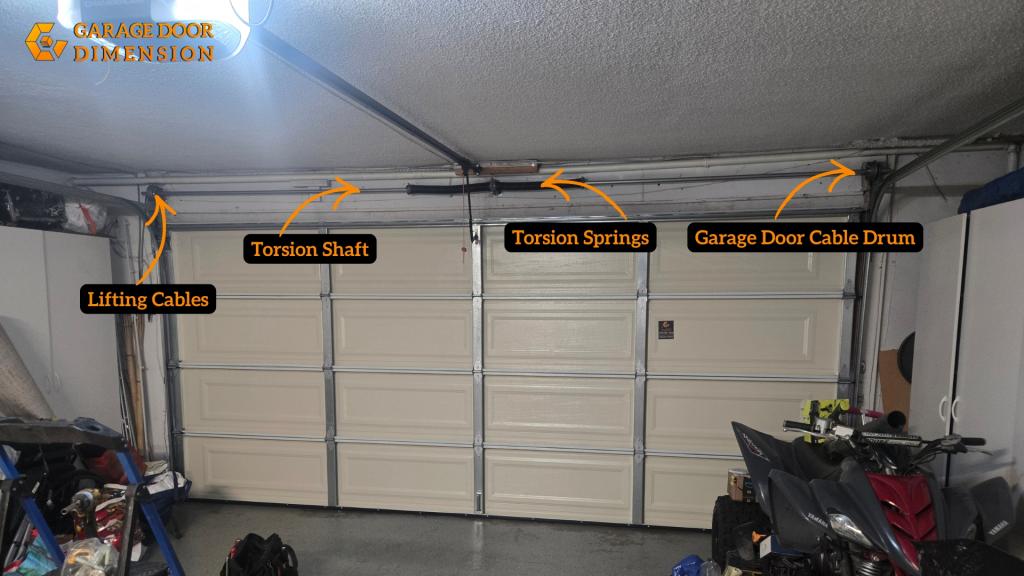
A garage door cable drum helps control the cables that lift and lower your garage door. You will usually find one drum on each end of the torsion shaft above the door.
Each lifting cable runs from the bottom of the garage door up to a drum. As the door opens, the drums turn and wind the cables into their grooves. This pulls both sides of the door upward. When the door closes, the drums slowly release the cables so the door can move back down.
Both drums need to turn evenly. If one side winds or releases more cable than the other, the garage door can start to tilt or move unevenly. The drums do not lift the door on their own, though. They work with the torsion spring and shaft to keep the door moving smoothly and level.
What Happens to the Cable When the Garage Door Opens?
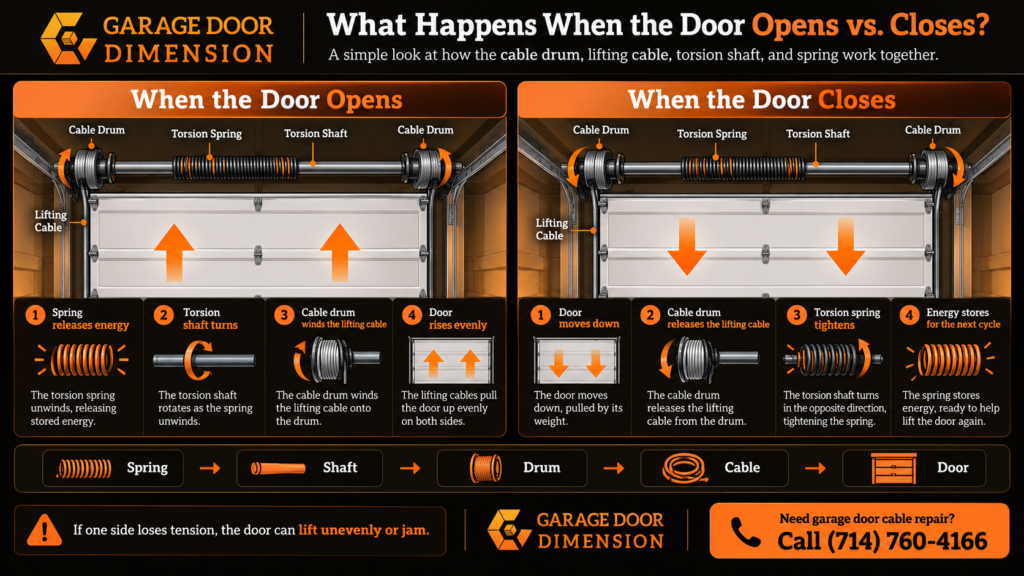
When you press the remote or wall button, the lifting system starts working right away. The torsion spring helps turn the torsion shaft above the door. Since the cable drums sit on that shaft, they turn at the same time.
As each drum rotates, the lifting cable winds neatly into the grooves around it. Because the cables connect near the bottom of the garage door, this winding action helps pull the door upward.
Both sides need to wind at the same pace. That keeps the garage door level as it rises. The opener starts the movement, but the spring, shaft, drums, and cables work together to handle the weight of the door and keep it moving smoothly.
What Happens When the Garage Door Closes?
When the garage door closes, the lifting system works in reverse. The cable drums turn the opposite way and slowly release the lifting cables. As the cables unwind, the door moves back toward the floor. At the same time, the torsion spring tightens and stores energy for the next opening cycle.
In simple terms, the spring powers the system, the shaft turns the drums, and the drums control how the cables wind and unwind. All of these parts need to work together so the door can move evenly and stay balanced.
How Garage Door Drum Grooves Guide the Cable
The grooves on a garage door cable drum help keep the cable in the right position as the door moves. When the garage door opens, the cable winds into these grooves in an even pattern. This keeps it from stacking unevenly or slipping out of place.
You can think of it like winding a hose onto a reel. If the hose does not follow the reel properly, it can bunch up or overlap. The same idea applies to a garage door cable. The grooves help the drum collect the cable evenly, which helps the door rise smoothly on both sides.
Proper garage door cable tension also matters. If the cable becomes too loose, it may no longer stay seated in the grooves. That can cause the door to move unevenly or create problems with the lifting system.
Why a Loose Cable Does Not Always Mean the Cable Failed
That lets you move the article forward instead of explaining the mechanism again. You can focus on why understanding the whole lifting system matters when something goes wrong.
For example: A loose garage door cable is easy to spot, but it does not always mean the cable itself is damaged.
The cable depends on the drum, torsion shaft, and spring system to maintain the right tension. If a drum shifts or the spring system loses balance, the cable can become loose even when it is still in good condition.
That is why a technician should check the entire lifting system before recommending a garage door cable repair. Simply putting the cable back on the drum may not solve the problem if another part caused it to lose tension.
Why Does a Garage Door Cable Come Off the Drum?
A garage door cable can come off the drum when it loses the tension that keeps it seated in the grooves. But the bigger question is: what caused that tension to change?
Common causes include:
- The cable drum shifts on the torsion shaft. If the drum moves out of position, the cable may no longer wind correctly.
- The spring system loses proper balance. When the spring no longer supports the door evenly, one cable may become loose.
- The door binds on one side. Track or roller resistance can make one side move differently from the other, which can affect cable tension.
- The bottom cable connection develops a problem. If the cable does not stay secure at the bottom of the door, it can lose tension and slip off the drum.
- The door starts moving unevenly. Sometimes uneven movement happens first. As one side rises or falls differently, the cable can eventually leave the drum grooves.
This is why simply putting the cable back on the drum may not fix the issue. If the original cause remains, the cable can come off again. A proper garage door cable repair should find and correct the reason the lifting system lost tension in the first place.
If your garage door cable has come off the drum, avoid running the door until the lifting system is checked. Garage Door Dimension can inspect the cable drum, spring system, torsion shaft, and cable tension to find the real cause of the problem.
Garage Door Cable Drum FAQs
Can a garage door work with a loose cable drum?
It may still move for a short time, but you should not keep using it. A loose or shifted garage door cable drum can change cable tension and make the door lift unevenly. Continued use may cause the cable to come off the drum or make the door jam.
How do I know if my garage door cable drum has a problem?
Common signs include a crooked garage door, one side rising faster than the other, a loose lifting cable, or a cable that no longer sits correctly in the drum grooves. Unusual scraping or jerking can also point to a problem in the lifting system.
Can a garage door cable come off the drum without breaking?
Yes. A cable can slip off the drum even when it is not broken. Poor garage door cable tension, a shifted drum, spring imbalance, or uneven door movement can all cause the cable to leave its grooves.
Should I put the garage door cable back on the drum myself?
No. The cable drum works with the torsion spring and shaft, which operate under high tension. Trying to reset the drum or cable without the right tools and training can be dangerous. A technician should inspect the lifting system and correct the cause of the problem.
Does a loose garage door cable always need replacement?
Not always. Sometimes the cable is still usable, but another part of the system caused it to lose tension. A technician should check the drum, torsion shaft, spring balance, and cable condition before recommending garage door cable repair or replacement.
Who repairs garage door cable drums in Santa Ana, CA?
Garage Door Dimension provides garage door cable and lifting-system inspections in Santa Ana and across Orange County. If your door looks uneven, a cable has come off the drum, or the lifting system is not moving correctly, call (714) 760-4166 to schedule service.
Understand the Whole Garage Door Lifting System
A garage door cable drum may be a small part, but it plays a big role in keeping the door level as it opens and closes. It controls how the lifting cable winds and releases while the torsion spring and shaft provide the force behind that movement.
That is why a loose cable does not always mean the cable itself failed. The drum, spring system, shaft, and cable tension all need to work together. When one part changes, the problem can show up somewhere else.
Knowing how the system works makes it easier to recognize when something does not look right and when it is time to have the door checked.
Need Garage Door Cable Repair in Santa Ana?
If your garage door rises unevenly, a cable has slipped off the drum, or the door no longer moves normally, Garage Door Dimension can help.
Our licensed technicians inspect the cable drums, lifting cables, torsion shaft, springs, and cable tension to find the source of the problem before recommending a repair. We also keep high-quality garage door parts readily available in our local Orange County warehouse.
Call (714) 760-4166 to schedule professional garage door cable repair in Santa Ana and Orange County.






 I am a Garage Door Professional
  I am a Residential or Commercial Customer