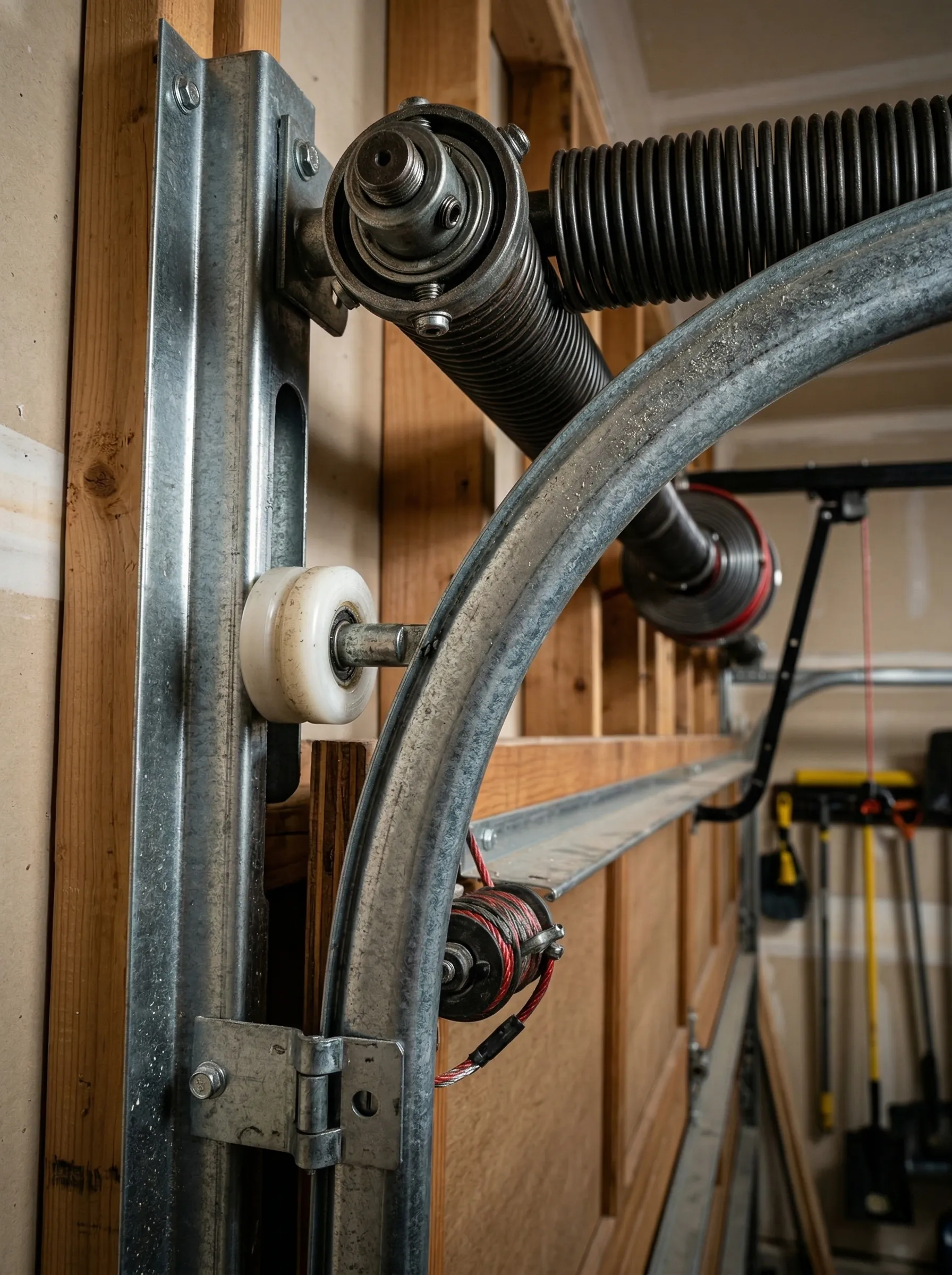




Have you ever wondered how your heavy garage door opens with just one press of a button? The opener gets most of the credit, but it does not do all the work. Behind the scenes, cables and springs provide the lifting support that makes everyday operation possible.
When these parts work properly, your garage door moves smoothly without putting too much strain on the opener. However, when one component develops a problem, the whole lifting system can struggle.
In our previous blog, we shared 7 cable care habits that can help prevent premature failure. This time, we will explain how garage door cables, springs, and drums work together, why each part matters, and what happens when they stop working as a team.
At Garage Door Dimension, we want Santa Ana homeowners to understand how their garage doors work without getting lost in technical terms. Knowing the basics can help you recognize warning signs and make better repair decisions.
Quick Answer: How Do Garage Door Cables and Springs Work Together?
Garage door cables and springs share the job of lifting and lowering your garage door. The springs store and release energy to help balance the door’s weight, while the lifting cables transfer that force to the door through the cable drums.
Think of it as teamwork:
- Springs provide the force that helps lift the door.
- Cables connect the lifting system to the door.
- Cable drums wind and unwind the cables as the door moves.
- The opener starts and controls the powered movement of a properly balanced door.
When everything works together, the door moves evenly. If one part fails, the lifting system may lose its balance.
How Cables and Springs Lift Your Garage Door
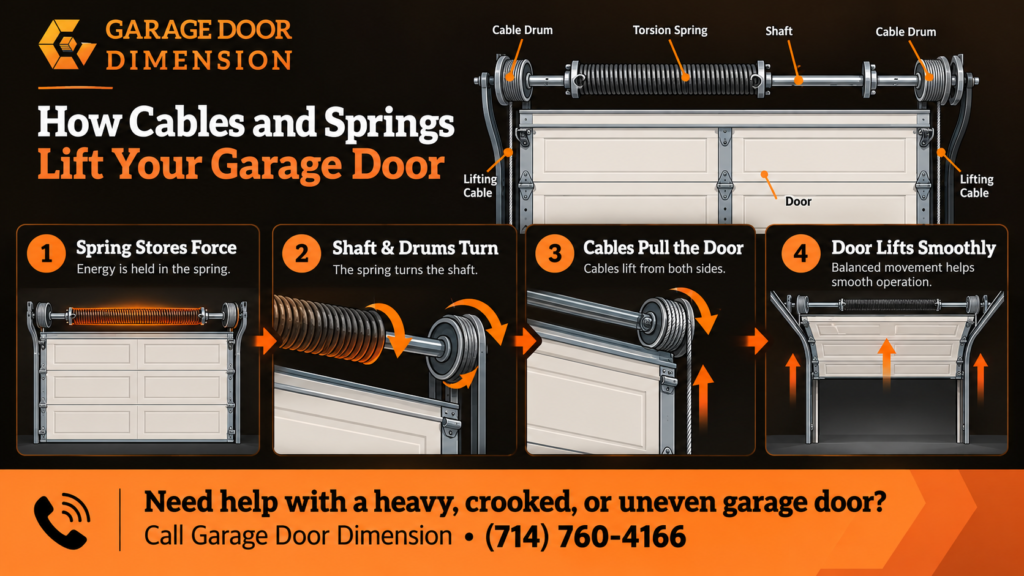
To understand how everything connects, picture what happens when you press your garage door remote. On a typical torsion spring system, three connected actions make that movement possible.
Step 1: The Springs Release Stored Energy
When the garage door is closed, the torsion spring holds energy in its tightly wound coils.
As the door opens, the spring releases some of that energy and turns the metal shaft above the door. This rotation provides the force needed to help lift the door’s weight.
Without proper spring support, the opener would have to work much harder.
Step 2: The Garage Cable Drums Rotate
The shaft connects to round metal drums near the upper corners of the garage door. As the shaft turns, these garage door cable drums rotate and wind the lifting cables into their grooves.
The grooves guide the cables as they move, helping keep them in the correct position.
Step 3: The Lifting Cables Raise the Door
Each lifting cable connects to a bracket near the bottom of the garage door. As the drums wind the cables, the cables pull upward on the bottom brackets. This action helps raise the door evenly along the tracks.
The entire process happens in seconds, but each component must work correctly to keep the movement controlled.
What Happens to Cables and Springs When the Door Closes?
The process reverses when you close your garage door. As the door lowers, the drums unwind the lifting cables. Meanwhile, the door’s weight helps turn the shaft and wind the torsion spring tighter.
This stores energy for the next opening cycle. Throughout this movement, the cables should remain seated in the drum grooves with proper cable tension.
If a cable slips or the spring system loses its adjustment, the door may struggle to move evenly. That brings us to another important part of garage door operation: balance.
How Cables and Springs Affect Garage Door Balance
A balanced garage door needs the right amount of spring force and properly positioned cables.
If the springs provide too little lifting support, the door can feel unusually heavy. The opener may struggle because it must work against more of the door’s weight.
On the other hand, uneven cable positioning can make one side move differently from the other.
You might notice:
- One side of the door hangs lower.
- The door shakes or jerks while moving.
- A cable looks slack or sits incorrectly on its drum.
- The opener struggles to lift the door.
- The door stops or becomes stuck partway.
These signs do not always identify one failed part. A damaged roller, bent track, or loose hinge can also affect movement. That is why it is recommended that a technician should check the complete lifting system before recommending repairs.
What Happens When Cables and Springs Develop Problems?
A garage door problem often begins with one component, but the effects can spread. Understanding the difference between common failures can help you explain the symptoms when scheduling service.
Here are common issues and what homeowners might notice:
| Lifting System Problem | What You May Notice |
|---|---|
| Broken torsion spring | Door feels extremely heavy or will not open |
| Frayed or broken cable | Door tilts, jams, or moves unevenly |
| Cable slips off the drum | One side loses proper lifting support |
| Incorrect spring tension | Door feels heavy or difficult to operate |
| Damaged cable drum | Cable winds incorrectly or slips |
Picture getting ready for work near South Coast Metro when your garage door suddenly stops halfway up. You might assume the opener has failed because it no longer lifts the door. But the opener may be responding to a problem elsewhere in the lifting system.
That is why identifying the cause matters more than immediately replacing the part that appears to be struggling. Next week, we’ll dive deeper into this exact scenario—what to do when the garage door cable comes off the drum.
Why Replacing One Garage Door Part May Not Fix the Problem
A damaged cable or broken spring may seem like the obvious reason your garage door stopped working. However, the part showing the problem is not always the part that caused it.
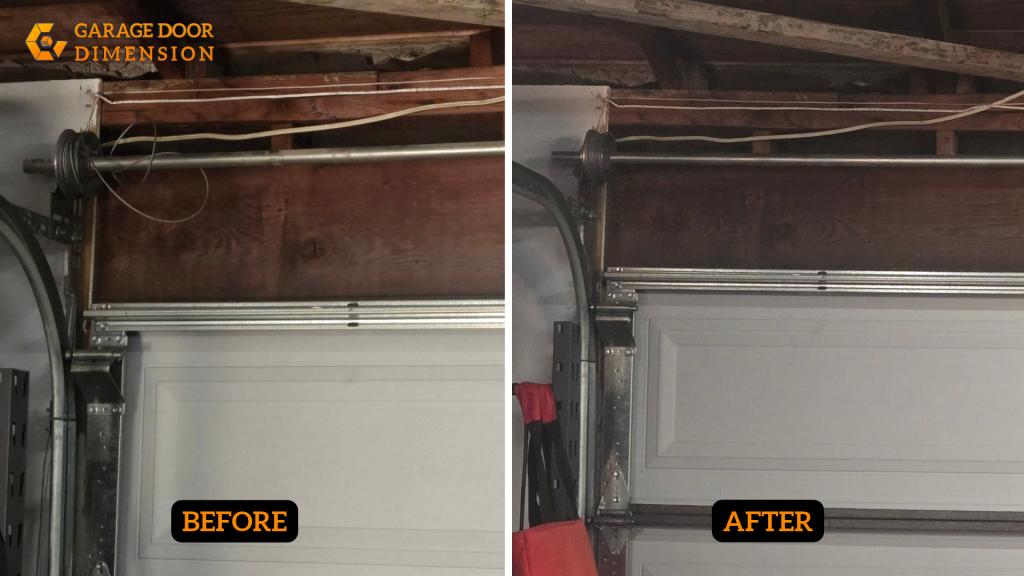
For example, a lifting cable may keep slipping off its drum because the drum is damaged or the door is out of alignment. Replacing the cable alone will not solve the issue if the underlying cause remains.
The same applies to springs. If a technician installs a spring that does not match the door’s weight and lifting requirements, it can affect garage door balance and put additional strain on the cables, opener, and other hardware.
That is why Garage Door Dimension checks how the cables and springs work together before recommending repairs. By identifying the actual cause, we can recommend the right solution, avoid unnecessary part replacements, and help prevent the same problem from happening again.
FAQs About Garage Door Cables and Springs
Homeowners often have a few questions about these parts, especially when their garage door begins acting differently.
Can a broken spring cause a garage door cable to come loose?
Yes. A broken garage door spring can change the door’s position and lifting support. As a result, a cable may lose tension or slip off its drum.
Do garage door cables stretch over time?
Cables can experience wear or damage, but a visibly loose cable does not always mean it has stretched. Problems with the springs, drums, or door position can also cause slack.
Can I manually open my garage door if the spring breaks?
Avoid lifting the door yourself. Without proper spring support, the door may become extremely heavy and difficult to control.
Do garage door springs and cables need replacement at the same time?
Not always. A technician should assess the condition of each component and recommend replacement based on wear, damage, and the door’s lifting requirements.
Can a garage door work with only one lifting cable?
You should not operate a door with a broken or disconnected lifting cable. The remaining cable cannot safely provide the balanced support the system requires.
Get the Right Repair for Your Garage Door Lifting System
Does your garage door feel unusually heavy, lift unevenly, or struggle to open? Before replacing individual parts, find out what is causing the problem.
Garage Door Dimension can inspect your lifting system, evaluate the condition of the cables and springs, and explain whether you need cable repair, spring replacement, drum service, or another type of residential garage door repair.
Our licensed California technicians serve Santa Ana and nearby Orange County communities, helping homeowners make informed repair decisions.
Get the problem diagnosed before replacing parts by guesswork. Call Garage Door Dimension today at (714) 760-4166 to schedule professional garage door repair in Santa Ana, CA.






 I am a Garage Door Professional
 I am a Residential or Commercial Customer