



A garage door problem always seems to happen at the worst time. Maybe you are leaving for work near South Coast Metro. Maybe you need to take the kids to school from Floral Park. Or maybe you just got home near Downtown Santa Ana, and the garage door will not close. Before panic sets in, a little garage door troubleshooting can help you understand what is going on. Some issues have simple causes, like a dead remote battery or blocked safety sensor. Others need a trained garage door repair technician right away.
This guide walks you through safe checks you can do before calling for help. You will learn what to look for, what to avoid, and when DIY stops being practical. The goal is simple: protect your door, your home, and your safety.
Overview: What Santa Ana Homeowners Should Check First
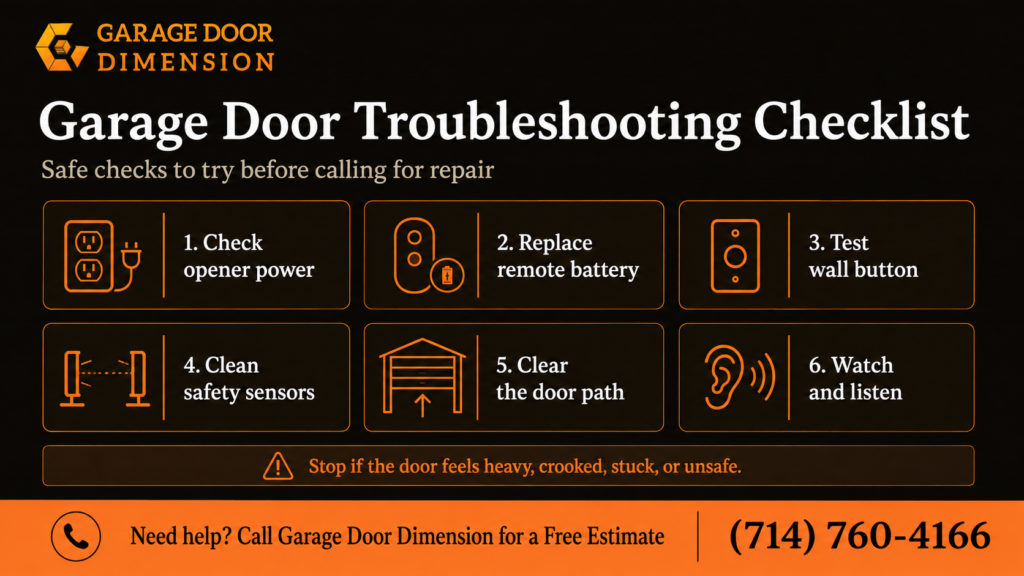
Start with the basics. Check the power, remote batteries, wall button, safety sensors, tracks, and anything blocking the door. Do not touch springs, cables, or parts under tension. If the door feels heavy, crooked, stuck, or unsafe, call an expert garage door professional.
Garage Door Troubleshooting Starts With Safety
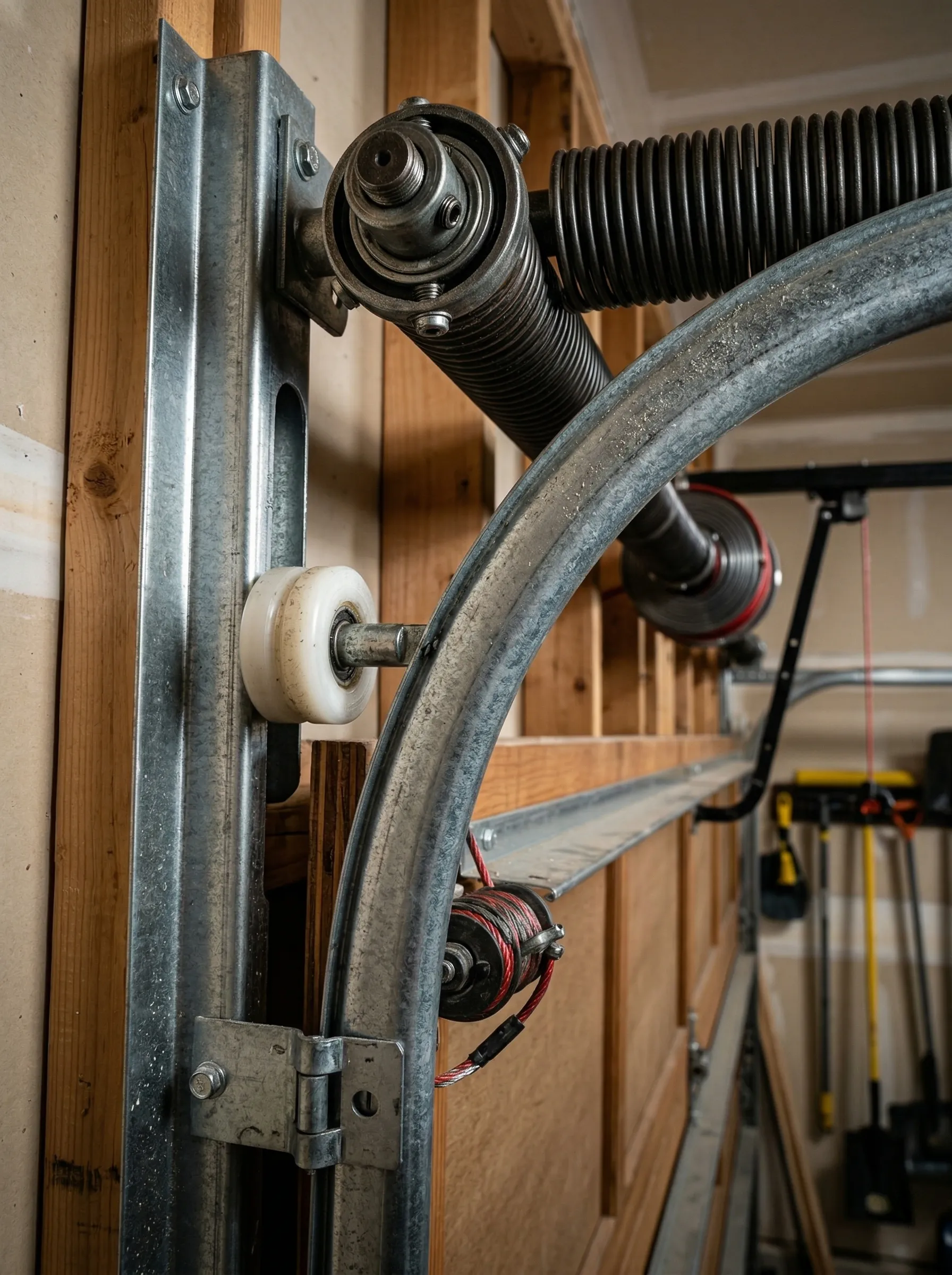
Before you inspect anything, slow down. A garage door is heavy, and several parts carry strong tension. That means some problems are not safe for DIY work.
You can safely check simple things, such as:
- Remote batteries
- Power source
- Wall button
- Safety sensor alignment
- Items blocking the door
- Visible dirt or debris in the tracks
However, do not try to adjust or remove:
- Springs
- Cables
- Bottom brackets
- Bent tracks
- Broken rollers
- Heavy panels
If your garage door won’t open and feels too heavy to lift, stop there. That can point to a broken spring or another serious issue. At that point, calling a local garage door repair team in Santa Ana is the safer choice.
How to Troubleshoot Your Garage Door
Now that you know what not to touch, you can start with the simple checks that help identify the most common garage door problems. Work through these steps in order, because the easiest fix is often the one homeowners miss first.
As you go, pay attention to how the door sounds, moves, and responds. If anything feels unsafe, stop there and call for a same-day garage door repair.
Step 1: Check the Opener Power Source
Sometimes, the problem starts with power, not the door itself. If the opener does not respond at all, look at the motor unit first.
Ask yourself:
- Is the opener plugged in?
- Did the outlet lose power?
- Did a breaker trip?
- Does the opener light turn on?
- Does the wall button work?
If the wall button works but the remote does not, the opener has power. That means the remote may be the problem. If nothing works, check your electrical panel. Santa Ana homes, especially older properties near French Park or Washington Square, can sometimes have older garage wiring or outlets that need attention.
If power looks fine and the opener still does nothing, you may need garage door opener repair.
Step 2: Test the Garage Door Remote and Keypad
A dead remote battery can make a working garage door seem broken. Before you assume the worst, replace the remote battery and try again.
Next, test the wall button. If the wall button opens the door but the remote does not, the issue may involve the remote, keypad, or opener signal.
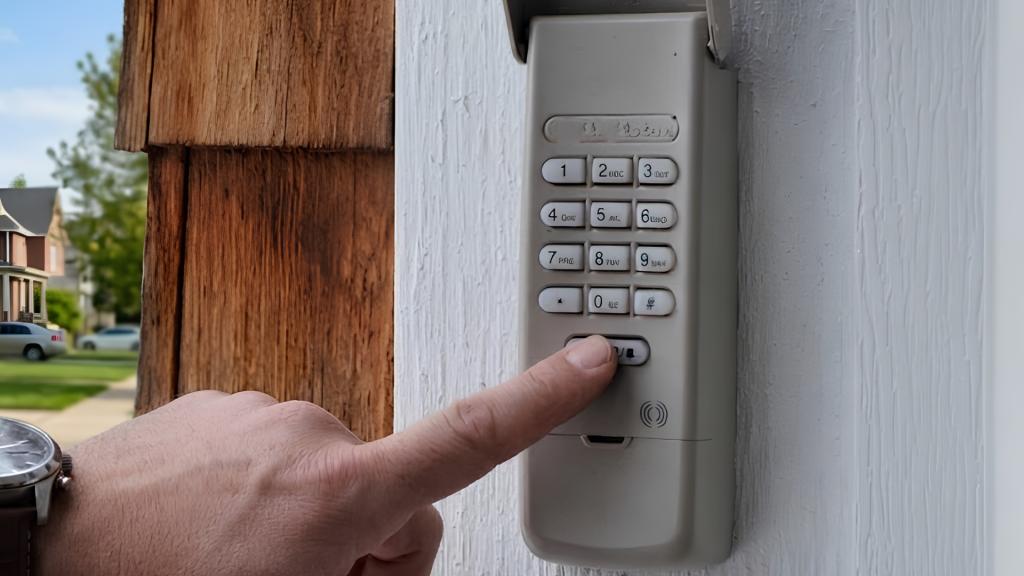
Also check these simple things:
- Did someone turn on vacation lock mode?
- Does the keypad need new batteries?
- Did the remote lose its programming?
- Are you standing too far away from the garage?
This is one of the easiest garage door problems to rule out. If fresh batteries do not help, Garage Door Dimension can inspect the opener and remote system.
Step 3: Inspect the Safety Sensors
If your garage door starts to close, then reverses, the safety sensors may be blocked or misaligned. These sensors sit near the bottom of the door tracks. They stop the door from closing on a person, pet, bike, box, or trash bin.
Check for anything blocking the sensor path. Then wipe the sensor lenses with a soft cloth. Dust, spider webs, or leaves can cause issues, especially in warm and dry Santa Ana weather.
Look at the sensor lights too. If one light blinks or turns off, the sensors may not line up. You can gently adjust them until both lights stay steady.
Still not closing? Then the issue may go beyond simple sensor alignment. A trained technician can check the wiring, sensor brackets, and opener settings.
Step 4: Check for Objects Blocking the Garage Door
This sounds simple, but it happens all the time. A small object can stop the door from closing all the way.
Look around the garage floor and tracks for:
- Boxes
- Tools
- Toys
- Leaves
- Rocks
- Trash cans
- Bike tires
- Loose weatherstripping
Even a small item can trigger the safety system. If your door closes partway and reverses, clear the area and try again.
However, do not force the door. If the door keeps stopping after you clear the area, another issue may be causing resistance.
Step 5: Listen to the Garage Door Noise
Your garage door can tell you a lot through sound. A quiet hum, loud grinding, scraping, popping, or banging noise can point to different problems. For example, grinding may mean worn rollers or opener strain. Scraping can point to a track issue. A loud bang may mean a spring broke.
Ask yourself:
- Did the noise start suddenly?
- Does it happen every time?
- Does the door shake while moving?
- Does the opener sound like it is struggling?
Some noise issues only need basic service. But loud, sudden, or worsening noise should not wait. When the door sounds like it is fighting to move, stop using it and schedule garage door repair.
Step 6: Watch How the Garage Door Moves
Stand inside the garage and watch the door as it opens and closes. Remember not to stand under the garage door and stay a safe distance away.
Look for these warning signs:
- The door moves unevenly.
- One side rises faster than the other.
- The door shakes hard.
- The door gets stuck halfway.
- The door closes too fast.
- The opener pulls, but the door barely moves.
These symptoms may point to spring, cable, roller, or track problems. You should not try to fix those parts yourself. If the door looks crooked or unstable, contact Garage Door Dimension before using it again.
When DIY Garage Door Troubleshooting Should Stop
Some garage door problems are safe to check. Others need a trained technician right away. If you notice any of these signs, stop using the door and call for garage door repair.
| Stop Troubleshooting If… | Possible Causes |
|---|---|
| The spring looks broken | The door may be too heavy to lift safely |
| A cable hangs loose | The door may move unevenly or drop |
| The door came off track | Forcing it can cause more damage |
| The door feels too heavy | The lift system may not be supporting the door |
| The opener strains but cannot lift | The opener may be fighting a bigger door problem |
| The door drops too fast | This can create a serious safety risk |
| You hear a loud snap or bang | A spring or cable may have failed |
| The door will not stay open | The system may be out of balance |
These are not small garage door problems. They can create safety risks for your family, car, and home. If any of these signs show up during garage door troubleshooting, do not force the door. A professional can inspect the system safely and fix the real problem before it gets worse.
A Safer Garage Door Starts With the Right Next Step
A little garage door troubleshooting can help you understand what is going on before you call for service. Start with the safe basics. Check the power, remote batteries, wall button, safety sensors, and anything blocking the door. These simple steps can sometimes solve the problem or help you explain the issue clearly when you call for help.
However, do not force a garage door that feels heavy, crooked, stuck, or unsafe. If you hear a loud snap, see a loose cable, or notice the door moving unevenly, stop using it. Some garage door problems need proper tools and trained hands.
Still wondering what a repair may cost after troubleshooting? In our next guide, Garage Door Repair Cost in Santa Ana: What Homeowners Should Expect, we will break down common repair price factors so you can plan with more confidence before scheduling service.
Tried These Steps? Call Garage Door Dimension for Safe Repair
If your garage door still will not work after these safe checks, do not keep forcing it. A stuck, heavy, crooked, or noisy door can get worse fast and may become unsafe for your home, car, or family.
Call Garage Door Dimension today at (714) 760-4166 for a free consultation. We are licensed in California and provide dependable garage door repair, garage door opener repair, and full garage door services for homeowners in Orange County.
We also serve HOAs, property managers, and builders who need reliable garage door service for residential communities, rental properties, and new construction projects. Whether your garage door will not open, keeps reversing, or feels unsafe, our local team can inspect the system, explain the issue clearly, and help you choose the right repair. Visit www.garagadoordimension.com to learn more.


 I am a Garage Door Professional
  I am a Residential or Commercial Customer