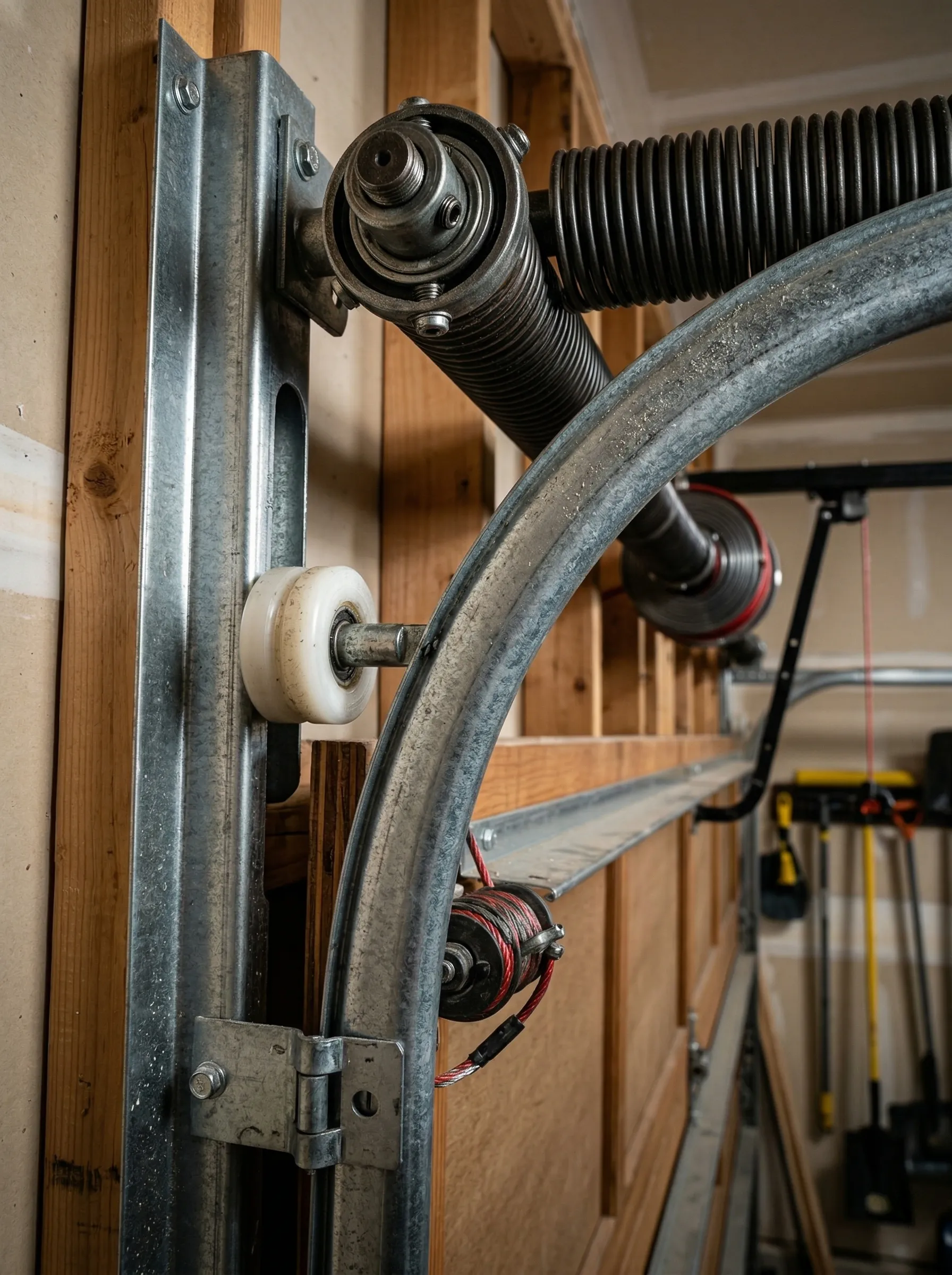




When it comes to garage door springs, understanding the differences between high-cycle vs standard springs is crucial for homeowners and businesses alike. These springs play a vital role in the functionality and longevity of garage doors, impacting both performance and maintenance costs.
This article will delve into the lifespan, durability, and replacement costs of these two types of springs, helping you make an informed decision. Many users face the dilemma of choosing between the cost-effective standard springs and the more durable high-cycle springs. By exploring their key differences, you can determine which option best suits your needs. We will cover the lifespan, durability, replacement costs, and the specific applications for each type of spring.
Quick Summary
High-cycle garage door springs offer a longer lifespan and greater durability compared to standard springs, making them ideal for heavy use in busy homes or commercial settings. While they come with a higher upfront cost, their extended durability can lead to savings over time. Standard springs are more affordable initially but may require more frequent replacements, making them suitable for average residential use.
Key Differences Between High-Cycle and Standard Garage Door Springs
This table summarizes the essential distinctions between high-cycle and standard garage door springs, helping you understand which option may be best suited for your needs based on durability, lifespan, and cost.
| Attribute | High-Cycle Springs | Standard Springs |
|---|---|---|
| Lifespan | 20,000 to 50,000 cycles | Approximately 10,000 cycles |
| Material | High-tensile, oil-tempered wire | Less durable materials |
| Cost | About $300.00 per pair | $30.00 to $50.00 per pair |
| Best Use | Heavy-duty applications (commercial or frequent use) | Average residential use |
| Replacement Frequency | Less frequent due to longer lifespan | More frequent, typically every 5-7 years |
Understanding these differences can help you make a more informed decision based on your specific usage needs.
Lifespan of High-Cycle vs Standard Springs
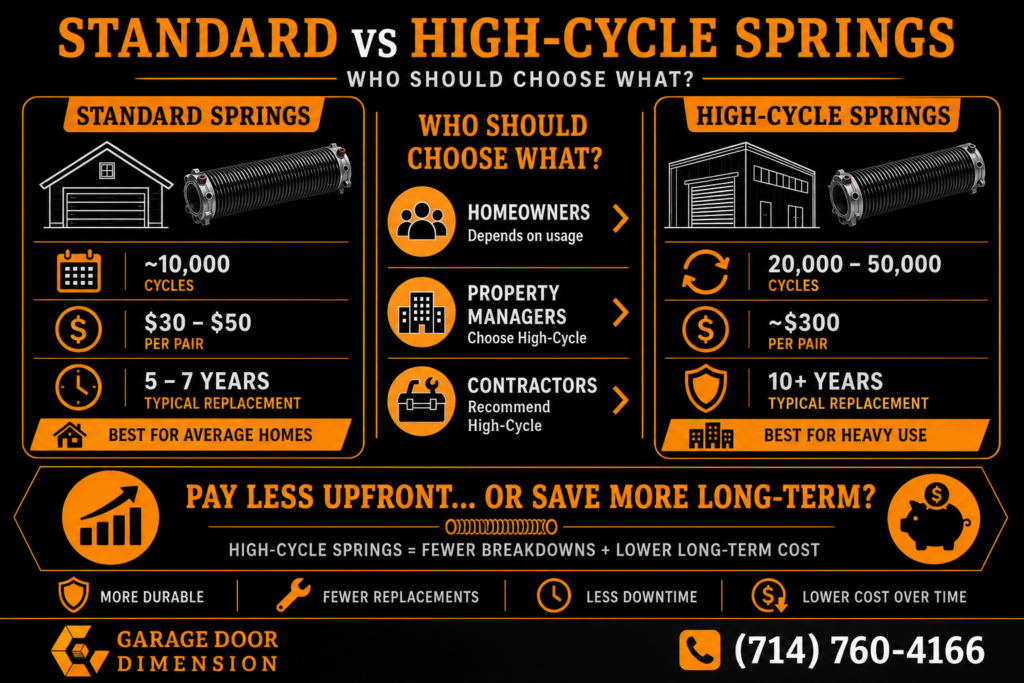
The lifespan of garage door springs is a critical factor to consider when making a choice between high-cycle vs standard springs. Standard springs typically last around 10,000 open and close cycles, making them suitable for average residential use. In contrast, high-cycle springs are designed for heavy-duty applications and can last between 20,000 to 50,000 cycles. This significant difference in lifespan can greatly affect your long-term maintenance and replacement needs.
Durability Comparison: High-Cycle vs Standard Springs
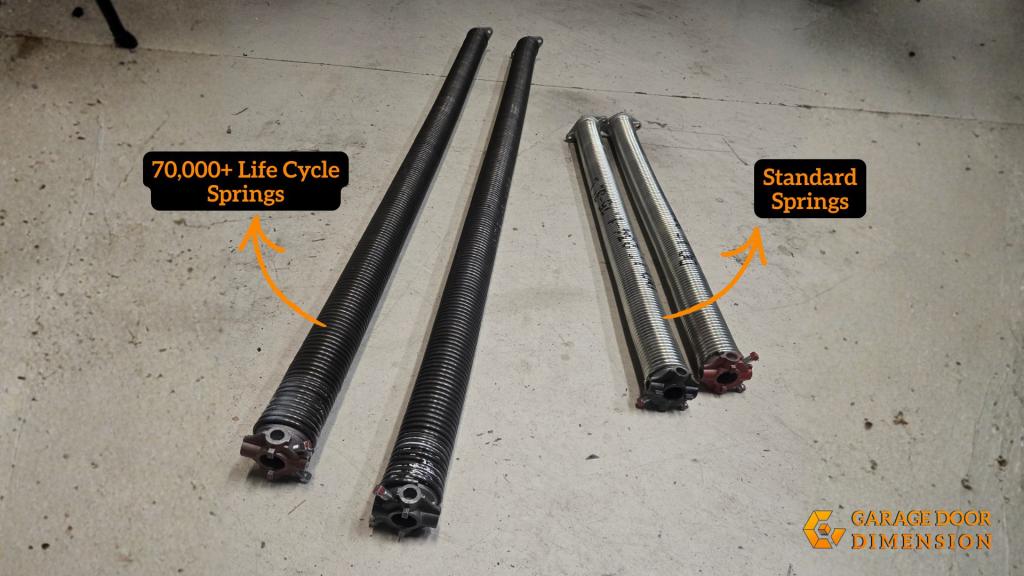
Durability is another essential aspect when comparing high-cycle vs standard springs. Standard springs are made for average use and may wear out quickly under frequent operation. On the other hand, high-cycle springs are constructed from high-tensile, oil-tempered wire, making them larger and more robust. This enhanced durability allows high-cycle springs to withstand the rigors of daily use, making them ideal for busy households or commercial properties.
Replacement Costs: High-Cycle vs Standard Springs
When considering replacement costs, it’s important to weigh the initial investment against long-term savings. High-cycle springs may have a higher upfront cost, typically around $300.00 for a pair, compared to standard springs, which can range from $30.00 to $50.00. However, while standard springs are less expensive initially, they may lead to higher long-term costs due to their shorter lifespan and the need for more frequent replacements.
What Are the Key Differences Between High-Cycle vs Standard Garage Door Springs?
Understanding the key differences between high-cycle vs standard garage door springs can help you make an informed decision. Here are the main distinctions:
- Construction: High-cycle springs use high-tensile wire, while standard springs are made from less durable materials.
- Performance: High-cycle springs are engineered for long-term, high-frequency use, whereas standard springs are generally rated for about 10,000 cycles.
- Suitability for Applications: High-cycle springs are best suited for busy homes and commercial properties, while standard springs are more appropriate for residential settings.
Construction:
The construction of garage door springs significantly impacts their performance and longevity. High-cycle springs are made from high-tensile, oil-tempered wire, which provides greater strength and resilience. In contrast, standard springs typically utilize less durable materials, making them more susceptible to wear and tear over time.
Performance:
Performance metrics reveal that high-cycle springs are engineered for long-term, high-frequency use, making them ideal for environments with heavy garage door traffic. Standard springs, rated for about 10,000 cycles, are more suitable for less frequent use, such as in residential settings where the garage door is not opened daily.
Suitability for Applications:
The suitability of each type of spring varies based on the intended application. High-cycle springs are best for busy homes and commercial properties that require frequent operation. Standard springs, on the other hand, are more appropriate for residential settings where the garage door is used less often.
How Do Cycle Ratings Define High-Cycle vs Standard Springs Durability and Performance?
Cycle ratings are a crucial factor in determining the durability and performance of garage door springs. High-cycle springs are designed to handle between 20,000 to 50,000 cycles, while standard springs typically manage around 10,000 cycles. This difference in cycle ratings directly correlates with the expected lifespan and maintenance needs of each spring type.
What Materials and Designs Distinguish High-Cycle vs Standard Springs?
The materials and designs of high-cycle vs standard springs play a significant role in their performance. High-cycle springs are made from high-tensile, oil-tempered wire, which enhances their durability and resistance to fatigue. In contrast, standard springs are often constructed from less durable materials, leading to a shorter lifespan and increased likelihood of failure.
Proper selection of garage door springs often involves specialized tools and calculations to ensure the correct fit and performance.
Selecting Garage Door Torsion Springs for Overhead Doors
torsion spring calculators for sectional overhead doors. Using the SpringForce calculator gives the size and type of springs needed for the door.
How Does Spring Lifespan Impact Maintenance and Replacement Frequency for High-Cycle vs Standard Springs?
The lifespan of garage door springs directly impacts maintenance and replacement frequency. High-cycle springs require less frequent replacement due to their longer lifespan, which can lead to reduced maintenance costs over time. Conversely, standard springs may need replacement every 5-7 years, resulting in higher long-term costs for homeowners.
What Is the Expected Lifespan of High-Cycle Springs Compared to Standard Springs?
High-cycle springs can last significantly longer than standard springs, with lifespans ranging from 20,000 to 50,000 cycles compared to the 10,000 cycles typical of standard springs. This extended lifespan makes high-cycle springs a more cost-effective option for those who frequently use their garage doors.
How Does Spring Lifespan Affect Long-Term Cost Efficiency for Residential and Commercial Users?
The longevity of garage door springs affects long-term cost efficiency for both residential and commercial users. High-cycle springs, while initially more expensive, can lead to lower overall costs due to their durability and reduced replacement frequency. In contrast, standard springs may seem more affordable upfront but can result in higher long-term expenses due to their shorter lifespan.
What Are the Cost Considerations for High-Cycle vs Standard Garage Door Springs?
When evaluating cost considerations, it’s essential to compare the initial purchase prices and long-term savings. High-cycle springs generally have a higher initial cost, but their durability can lead to significant savings over time. Standard springs, while cheaper initially, may require more frequent replacements, ultimately increasing overall costs.
How Do Initial Purchase Prices Compare Between High-Cycle and Standard Springs?
Initial purchase prices for garage door springs vary significantly between high-cycle and standard options. Standard garage door springs can range from $30.00 to $50.00, while high-cycle springs typically cost around $300.00 for a pair. This price difference reflects the materials and engineering involved in each type of spring.
What Are the Typical Garage Door Spring Replacement Costs in Santa Ana and Southern California?
In Santa Ana and Southern California, the typical installation fee for spring replacement is around $200.00. High-cycle springs can cost approximately $300.00 for a set, while standard springs are generally less expensive. Understanding these costs can help homeowners budget for maintenance and replacements.
For more information on garage door spring replacement cost, make sure to review our full breakdown before deciding which option fits your needs.
Where Can Trade Professionals Access Reliable Wholesale Garage Door Springs and Replacement Services?
Trade professionals looking for reliable wholesale garage door springs can turn to Garage Door Dimension, which offers a variety of options for both high-cycle and standard springs. Contacting us online can provide access to competitive pricing and quality products.
What Wholesale Options Does Garage Door Dimension Offer for High-Cycle and Standard Springs?
Garage Door Dimension provides trade-only pricing for high-cycle and standard springs, ensuring that professionals can access quality products at competitive rates. We also offer fast delivery and technical support to assist with any inquiries.
How Can Professionals Benefit from Localized Spring Replacement Services in Santa Ana?
Localized spring replacement services in Santa Ana offer several advantages, including fast service and expert technicians. These services ensure that quality parts are used and that pricing is clear, making it easier for professionals to manage their projects efficiently.
Conclusion
Choosing between high-cycle vs standard garage door springs can significantly impact your maintenance costs and overall functionality. High-cycle springs offer enhanced durability and a longer lifespan, making them ideal for frequent use, while standard springs may be more cost-effective initially but require more frequent replacements. Understanding these differences empowers you to make an informed decision that aligns with your specific needs. For expert guidance and a wide selection of quality springs, explore our offerings today.
Shop Quality Garage Door Springs
Upgrade to Longer-Lasting Garage Door Springs Today
Don’t settle for frequent repairs and replacements. Upgrade to high-cycle garage door springs for superior durability, extended lifespan, and enhanced performance. Whether for residential or commercial use, investing in longer-lasting springs means fewer maintenance hassles and better cost efficiency over time.
Contact us at (714) 760-4166 now to find the perfect high-cycle or standard garage door springs tailored to your needs and enjoy reliable, smooth operation for years to come.

 I am a Garage Door Professional
  I am a Residential or Commercial Customer