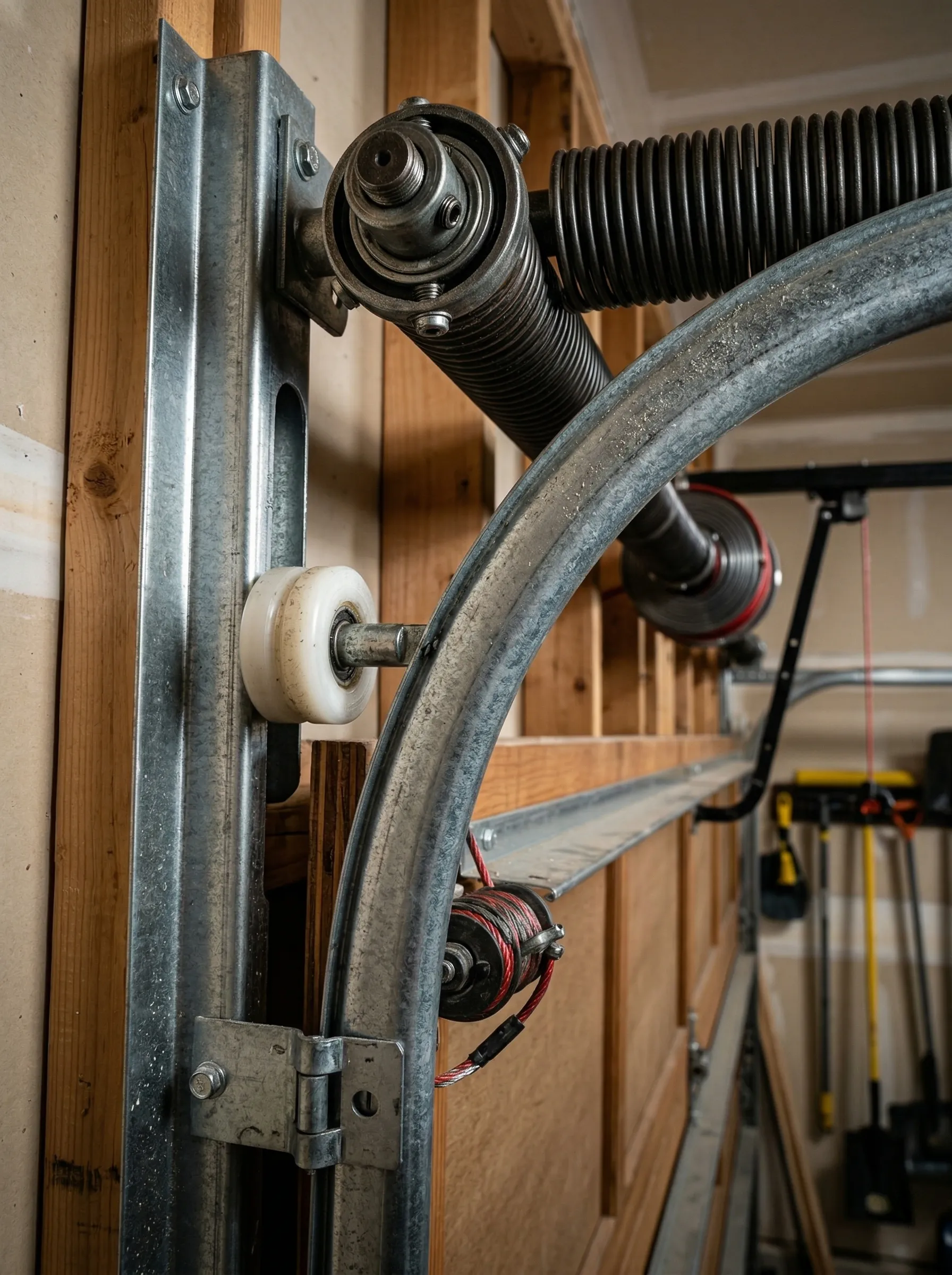




Noisy garage door rollers can make your entire home feel unsettled. A loud squeak in the morning, a rough grinding sound at night, or a rattling door that shakes through the garage can quickly become more than an annoyance. For Santa Ana homeowners, especially during peak summer usage, roller noise often gets worse when heat, dust, and daily wear add extra friction to the garage door system.
The good news is that most roller noise has a clear cause. Some issues need simple maintenance. Others point to worn garage door rollers that should be repaired or replaced before they damage the opener, tracks, or hinges. Knowing what the sound means can help you act early and avoid bigger repairs.
Quick Summary
Noisy garage door rollers are often caused by dry rollers, worn bearings, track debris, or damaged roller wheels. Homeowners should listen to the type of noise, check for visible wear, avoid forcing the door, and schedule service if the sound continues. A quick repair can help restore smooth, quiet operation.
Why Are My Noisy Garage Door Rollers Getting Worse?
Noisy garage door rollers usually get worse when friction increases. Rollers move inside the tracks every time the garage door opens or closes. When those rollers dry out, crack, rust, or wear down, the door no longer glides smoothly.
In Santa Ana, summer heat can make the issue more noticeable. Lubrication can dry faster. Dust can collect inside the tracks. Homeowners may also use the garage more often during summer for travel, outdoor equipment, or family activities.
As the rollers struggle, the rest of the system works harder. That can affect:
- Garage door opener performance
- Track alignment
- Hinges and brackets
- Door balance
- Overall safety
If your garage door keeps getting louder, the sound is usually a warning sign.
What Do Different Noisy Garage Door Rollers Sounds Mean?
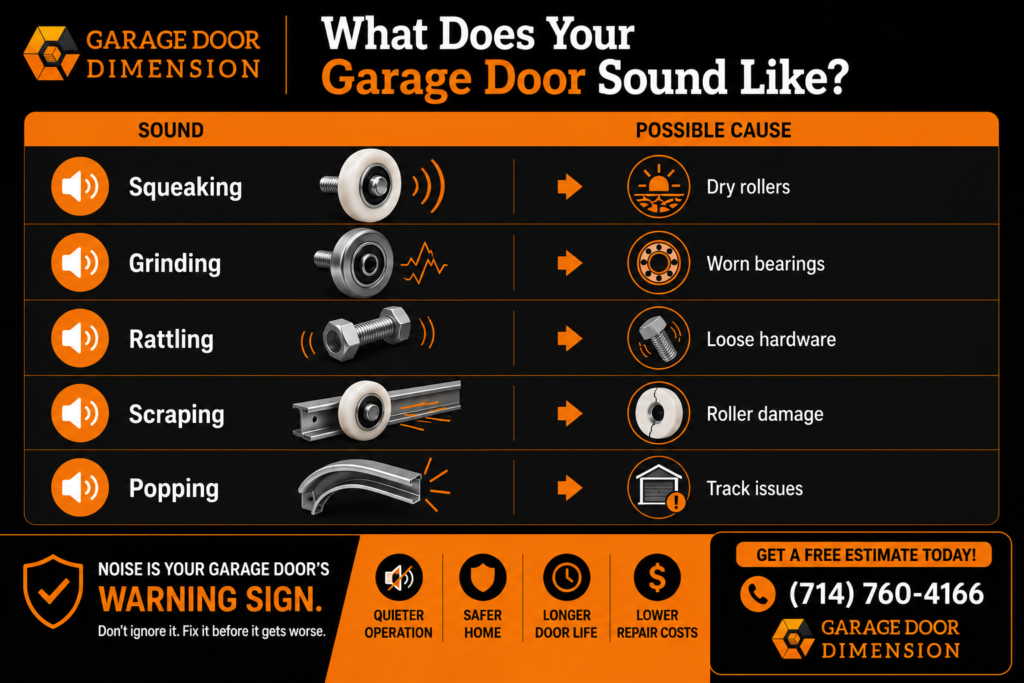
Different sounds can point to different roller problems. Listening closely can help you explain the issue to a technician.
Why Are My Noisy Garage Door Rollers Squeaking?
A squeaky garage door often means the rollers or tracks need lubrication. It may also mean dust has built up around the moving parts.
Squeaking is common, but it should not be ignored. If it continues after basic maintenance, the rollers may be worn or damaged.
Why Are My Noisy Garage Door Rollers Grinding?
Grinding sounds often suggest worn bearings or damaged rollers. This sound is more serious than a light squeak.
Grinding may mean the roller is no longer turning smoothly. If the door keeps moving this way, it can create extra strain on the opener and tracks.
Why Are My Noisy Garage Door Rollers Rattling?
Rattling can come from loose hardware, worn roller stems, or vibration inside the track. It may also happen when rollers no longer fit securely.
A rattling garage door can get worse quickly if the loose parts are not tightened or repaired.
Why Are My Noisy Garage Door Rollers Scraping?
Scraping may mean the roller is damaged, the track is misaligned, or the door is moving unevenly.
This sound should be checked soon. Scraping can lead to track damage or off-track movement if ignored.
Why Are Garage Door Rollers Noisier During Summer?
Garage doors often get louder during summer because heat changes how parts move and wear.
In Orange County, warm weather can affect garage door parts in several ways:
- Lubricant dries faster
- Metal parts expand slightly
- Dust sticks to moving parts
- Rollers experience more friction
- Garage doors may get used more often
Peak summer usage can make an existing roller issue show up sooner. If your door was already slightly noisy in spring, it may become much louder in summer.
This is why summer is a smart time to schedule a garage roller inspection. Early service can help prevent surprise breakdowns when your garage door is being used the most.
What Should Homeowners Do About Noisy Garage Door Rollers?
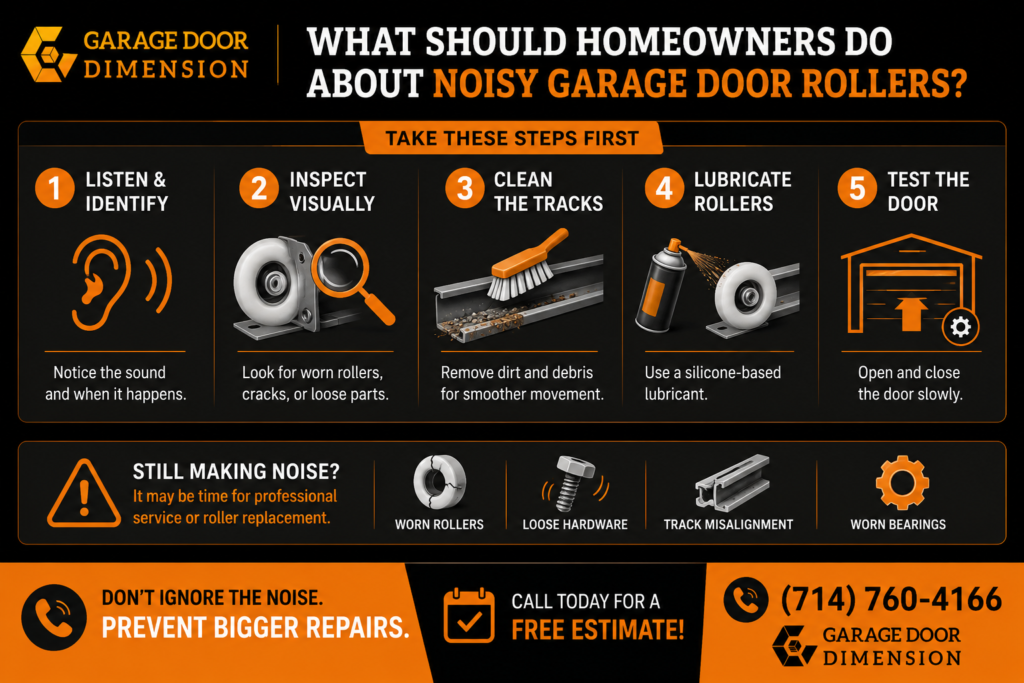
Homeowners can take a few safe steps before calling for service. The goal is to observe the issue, not force the door or take apart the system.
How Should You Inspect Noisy Garage Door Rollers Safely?
Stand inside the garage and watch the door move from a safe distance.
Look for:
- Wobbling rollers
- Cracked roller wheels
- Rust or corrosion
- Uneven door movement
- Shaking tracks
Do not place your hands near moving rollers, cables, springs, or hinges.
Can Cleaning Help a Squeaky Garage Door?
Yes, sometimes cleaning can help a squeaky garage door. Dirt, leaves, and dust can collect around the tracks and rollers.
You can clear visible debris from the track area with a soft brush or dry cloth. However, do not remove rollers or loosen track hardware.
Should You Lubricate Noisy Garage Door Rollers?
Lubrication can help if the noise comes from friction. Use a garage-door-safe lubricant, such as silicone-based spray, and avoid heavy grease that attracts dust.
If lubrication does not reduce the noise, the rollers may be worn out or damaged.
When Should You Stop Using the Garage Door?
Stop using the door if you notice:
- Grinding sounds
- Scraping sounds
- Door shaking badly
- Door moving unevenly
- Rollers slipping or wobbling
- Door coming off track
These signs can become safety risks. Homeowners who want to prevent future roller problems can also learn more about routine garage door roller maintenance and how regular care helps extend the life of the entire system.
Should You Repair or Replace Noisy Garage Door Rollers?
Not every noisy roller needs replacement. Some roller problems can be fixed with cleaning, lubrication, or adjustment.
However, replacement may be the better option when:
- Rollers are cracked
- Bearings are worn
- Steel rollers are rusted
- Noise returns after maintenance
- The door jerks or shakes
- The rollers are old and unreliable
If your garage door rollers are worn out, replacing them can improve the entire garage door system. It can also reduce strain on the opener and help the door move more smoothly.
For many homeowners, upgrading to nylon rollers is a smart choice because they are quieter than many steel options and work well for residential garages. If you’re considering replacement, it’s also helpful to understand the factors that affect garage door roller replacement cost in Santa Ana, including roller type, door size, and overall system condition.
Understanding Garage Door Roller Types and Noise Levels
The type of roller installed on your garage door can have a major impact on how quietly and smoothly the system operates. The comparison below highlights common roller options, their typical noise levels, and durability considerations.
| Roller Type | Noise Level | Typical Lifespan | Best For | Maintenance Needs |
|---|---|---|---|---|
| Plastic Rollers | Loud | 2–5 years | Budget-friendly installations | Frequent maintenance |
| Steel Rollers (No Bearings) | Very Loud | 5–10 years | Light residential use | Regular lubrication |
| Steel Rollers (With Bearings) | Moderate | 10–15 years | Standard residential garages | Periodic lubrication |
| Nylon Rollers (Without Bearings) | Quiet | 10–12 years | Homeowners seeking quieter operation | Low maintenance |
| Nylon Rollers (With Bearings) | Very Quiet | 12–20 years | High-use residential garages | Minimal maintenance |
| Sealed Bearing Rollers | Extremely Quiet | 15–20+ years | Premium performance and durability | Very low maintenance |
If you’re deciding between materials, our guide on nylon vs. steel garage door rollers provides a more detailed breakdown of the benefits and drawbacks of each option.
How Can Garage Door Dimension Help With Noisy Garage Door Rollers?
Garage Door Dimension helps Santa Ana homeowners diagnose and fix noisy garage door rollers before they lead to larger repairs.
Our team can inspect:
- Rollers
- Tracks
- Hinges
- Brackets
- Springs
- Garage door opener
We can also explain whether your door needs maintenance, repair, or roller replacement. If your garage door is loud, shaky, or harder to open, professional service can help restore smooth operation and prevent further damage.
Garage Door Dimension serves homeowners across Santa Ana and nearby Orange County communities with local garage door roller repair support, parts, and maintenance service.
FAQ: Noisy Garage Door Rollers
Can noisy garage door rollers damage my opener?
Yes, noisy garage door rollers can damage your opener. Worn rollers create extra resistance, which can make the opener work harder than it should.
Are noisy garage door rollers an emergency?
Noisy garage door rollers are not always an emergency. However, grinding, scraping, or off-track movement should be checked quickly to avoid damage or safety issues.
Why does my garage door make noise only in the morning?
Cooler morning temperatures, dry rollers, or stiff moving parts may make noise more noticeable at the start of the day.
Can new rollers still make noise?
Yes, if they are installed incorrectly, new rollers can still make noise, paired with dirty tracks, or affected by another issue like loose hinges or opener strain.
How long does roller repair or replacement take?
Most roller repairs or replacements can be completed within a few hours, depending on the door condition and roller type.
Conclusion
Noisy garage door rollers are more than a small irritation. They can be an early sign of friction, wear, poor alignment, or roller damage. During Santa Ana’s busy summer season, these problems can become louder and more urgent as heat and daily use add extra strain to the garage door system.
If your garage door squeaks, grinds, rattles, or scrapes, do not wait for the problem to get worse. A quick inspection can help prevent damage to the opener, tracks, and other moving parts.
Stop the Noise Before It Turns Into a Bigger Repair
A loud garage door can disrupt your home and signal a problem inside the system. Garage Door Dimension helps homeowners throughout Santa Ana and Orange County repair, replace, and maintain noisy garage door rollers for smoother daily use.
Call Garage Door Dimension today at (714) 760-4166 for a Free Estimate and get your garage door moving quietly again.




 I am a Garage Door Professional
  I am a Residential or Commercial Customer